


To know more about

- Furniture Care
Guide
Practical advice on how to clean, maintain and protect sofas, chairs, wooden and stone surfaces, beds, mattresses and curtains so furniture stays in excellent condition.
Furniture Care Guide
Introduction
Furniture is an essential part of any home, offering both functionality and aesthetic appeal. To ensure that your furniture remains in excellent condition for years to come, regular care and maintenance are essential.
This Furniture Care Guide provides practical advice on how to clean, maintain and protect various types of furniture, including sofas, chairs, wooden surfaces, stone finishes, beds, mattresses and curtains.
Understanding the materials used in your furniture and following the correct care procedures will help you prevent common issues such as fabric fading, wood warping, upholstery pilling and surface scratches.
This guide outlines best practices for maintenance, ensuring that your furniture continues to look and feel as good as new.
General Furniture Care Tips
Regular maintenance
- Clean surfaces and upholstery frequently using appropriate cleaning methods to prevent dust buildup.
- Rotate and fluff cushions regularly to ensure even wear.
Correct placement
- Keep furniture away from direct sunlight to prevent fading and discoloration.
- Ensure a minimum distance of 20–50 cm from heat sources such as radiators and fireplaces to prevent warping or cracking.
Proper handling
- Lift furniture instead of dragging it, to avoid damage to legs and flooring.
- Avoid excessive weight on delicate surfaces such as glass, marble or veneered wood.
- Use furniture appropriately. Avoid standing or jumping on sofas, beds, tables and chairs, or other misuse that can damage frames and fabrics.
Protective covers and accessories
- Use placemats, coasters and heatproof mats on tables to prevent stains, scratches and heat damage.
- For fabric upholstery, consider furniture covers or fabric protectors to guard against spills and stains.
Cleaning products and climate
- Never use solvents, harsh detergents or abrasive materials on furniture.
- Always test cleaning solutions on an inconspicuous area before applying them to visible surfaces.
- Keep indoor humidity levels stable to prevent cracking or expansion of wooden furniture.
- Avoid placing furniture in excessively damp or dry environments.
Monitor Humidity & Temperature
- Keep indoor humidity levels stable to prevent cracking or expansion of wooden furniture.
- Avoid placing furniture in excessively damp or dry environments.
Proper Handling
- Ensure furniture is used appropriately – avoid standing or jumping on sofas, beds, tables and chairs or other misuse that can damage frames and fabrics.
Daily Cleaning and Maintenance
These guidelines apply to upholstery, wood and metal surfaces.
- Upholstery: vacuum with a soft brush and use only mild fabric cleaners.
- Wood and veneer: wipe with a damp microfibre cloth and avoid harsh cleaners.
- Metal: clean with a mild soapy cloth and dry thoroughly to prevent water spots.
Do and don't
- Blot spills immediately.
- Use furniture protectors where possible.
- Do not use harsh solvents, bleach or abrasive pads.
- Do not expose furniture to extreme humidity or heat.

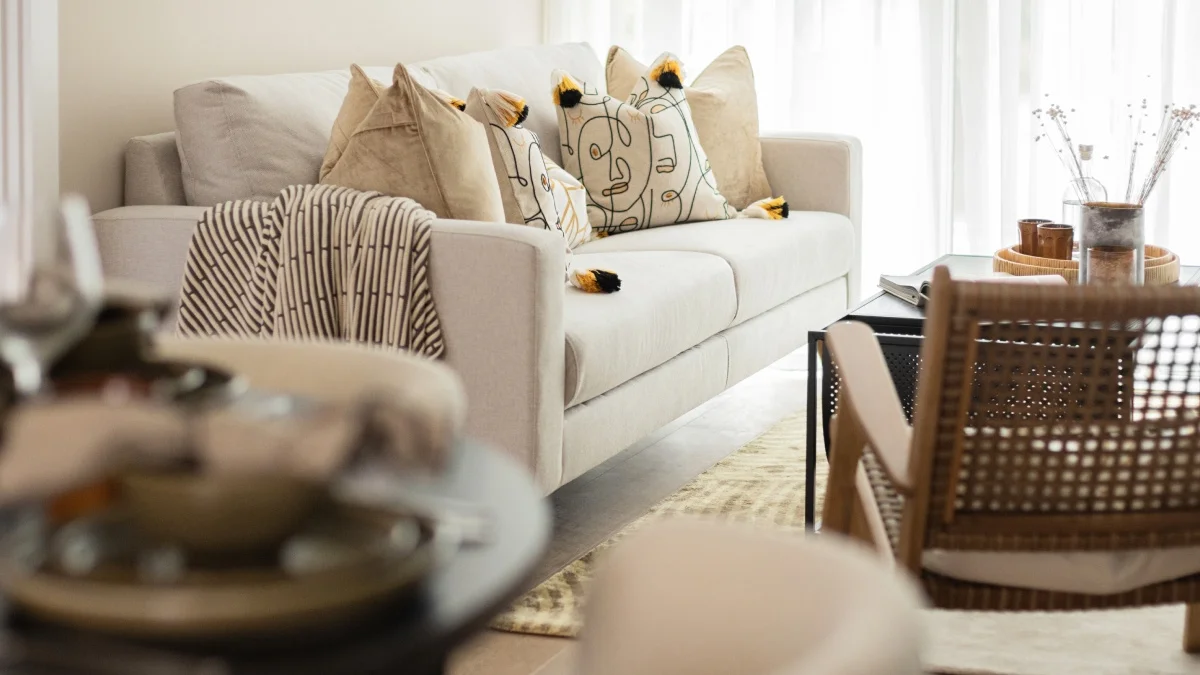
Sofas and Armchairs
Assembly and placement
- Assemble the sofa according to the instructions provided.
- Retighten screws and bolts regularly.
- Keep sofas at least 20–30 cm from heat sources such as radiators.
- Avoid direct sunlight to prevent fabric discoloration.
Cushion care
- Regularly swap loose cushions so they wear evenly.
- Back cushions often contain synthetic fibre, feathers or foam. Shake and plump them regularly to maintain shape.
- Expect minor wrinkles and softening of foam over time.
Common issues
- Wrinkles and indentations: these are normal and will adjust with regular use.
- Pilling and lint: remove with a pilling remover or lint roller.
- Foreign fibres: remove with a lint roller.
Cleaning
- Vacuum upholstery regularly with a soft brush attachment.
- Clean spills immediately. Blot, do not rub.
- Never use solvents or bleach.
- If cushions have removable covers, follow the attached care labels for washing.
Chairs
Wood chairs
- Wood is a natural material with unique veins and knots. These are natural characteristics, not defects.
- Wood reacts to climate changes. Keep indoor temperature around 20°C and humidity at 40–60%.
- Rotate furniture to minimise uneven discoloration from sunlight.
- Treat oil-treated wood with oil, and soap-treated wood with soap, every four months.
- Remove spills immediately with a moist cloth.
- Use placemats and coasters to protect the surface.
Upholstered chairs
- Vacuum regularly and remove stains as needed.
- Test stain removers on an inconspicuous area first.
- Rub stains inward in gentle circular strokes.
Lacquered metal
- Use a mild soapy cloth, wrung firmly.
- Wipe dry to prevent moisture damage.
- Never use solvents.
Warnings
- If the zipper pull is hidden, the cover is not washable.
- Loose excess threads may occur and can be carefully trimmed.
- Pilling is natural and can be removed with a pilling remover.
- Clothing materials such as denim and studded fabrics may cause wear.
Stability and safety
- Retighten screws regularly.
- If a chair wobbles, loosen screws to about 80% tightness, place the chair on a level surface, apply weight to the seat, then fully tighten the screws without overtightening.
- Chairs come with standard foot caps, which may need replacing depending on the floor type.
- Do not tilt the chair while seated, and do not stand on swivel chairs.
Solid Wood, Veneer and Laminate
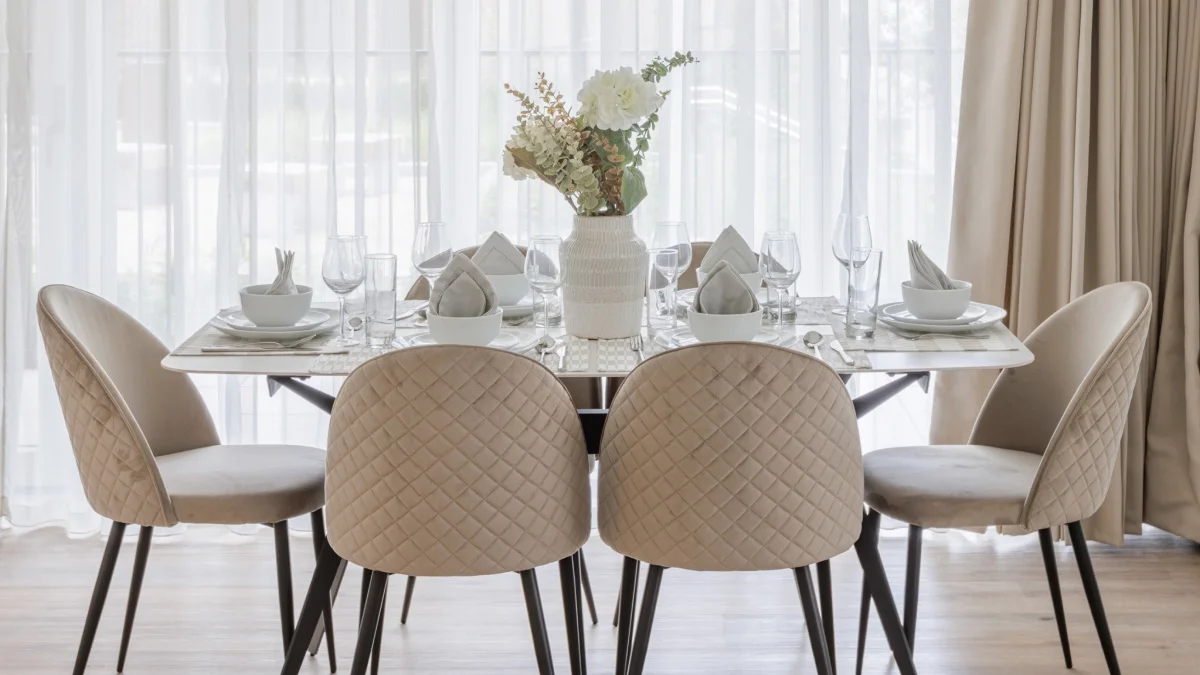
This applies to bedside cabinets, chests of drawers, coffee tables, side tables, dining tables and TV units.
General guidelines
- Follow assembly instructions step by step.
- Place furniture upright and avoid uneven surfaces that can make it unstable.
- Do not exceed recommended weight limits.
- Use coasters, placemats and heatproof mats to prevent heat or liquid damage.
Maintenance and cleaning
- Wipe surfaces with a soft, dry microfibre cloth.
- If necessary, use a damp cloth and dry immediately to prevent water stains.
- Avoid sharp or hard objects that may scratch surfaces.
Preventing damage
- Avoid perfumes, reed diffusers and other strong-scented liquids near furniture.
- Protect from direct sunlight to prevent discoloration.
- Cover unused furniture with dust sheets for long-term protection.
Marble and Travertine
This applies to coffee tables, side tables, dining tables and TV units.
Natural stone
- Each piece is unique because of natural variations in colour and veining.
- Travertine contains natural pinholes, which are filled during manufacturing.
Cleaning and care
- Use a moist cloth or a pH-neutral stone cleaner.
- Do not use acidic cleaning agents such as vinegar or lemon. They damage stone.
- Wipe spills immediately.
Maintenance
- Avoid placing hot items directly on stone. Use coasters and placemats.
- Lacquered stone is sealed and more resistant to spills.
- Water-polished stone has a natural finish and needs extra care.
Beds and Mattresses
Caring for a new bed
- Every effort has been taken to ensure your bed provides the highest level of comfort and support for years to come.
- Do not bend or fold the mattress. This can damage the spring unit and invalidate the warranty.
- Slight hollowing may appear on the sleeping surface at first. This is normal as fillings settle under body weight.
Handling
- Pocket-sprung mattresses are heavy. Seek assistance when rotating or turning them.
- Handles are for positioning only, not for carrying the mattress over distances.
- Never roll or bend the mattress, and do not stand or jump on it.
- Do not stand or jump on the mattress.
Protection
- Use a breathable mattress protector to prevent condensation build-up.
- Avoid plastic sheets or bags. Air the mattress regularly to keep it fresh.
Dimensions
Mattresses may appear slightly shorter than the base on arrival, then expand with use. Pocket-sprung and open-coil mattresses are designed this way to accommodate headboards and linens.
Turning and rotating
- Rotate head to foot and turn completely once a week for the first 12 weeks, then once a month.
- For dual-sided mattresses, rotate through 180 degrees monthly and flip twice a year for seasonal use.
- Non-turn mattresses should only be rotated through 180 degrees monthly.
- Pillow-top mattresses require rotation but should not be flipped.
Cleaning the mattress, base and headboard
- Clean every few months using a soft brush. Do not use a vacuum cleaner on the mattress.
- Absorb spills immediately with a dry cloth or paper towel.
- If needed, use a damp cloth with mild soap for spot cleaning.
Ottomans and storage beds
- Use the handle slots when raising or lowering the ottoman lid so it stays aligned.
- Periodically check gas pistons for leaks and ensure bolts remain tight.
- If gas pistons leak, contact your supplier for replacements.
Curtains
Dressing
- Tie curtains in their folds for 48 hours to help set the pleats.
- Lightly tie at three points — top, middle and bottom — using soft ribbon or fabric strips to avoid tie marks.
Shrinkage
- Some shrinkage may occur after the first dry-cleaning cycle, up to about 5%.
- Additional fabric is available in the hem for length adjustment if necessary.
- Certain atmospheric conditions may cause shrinkage while curtains are hanging.
Cleaning and maintenance
- Remove all curtain hooks before dry cleaning.
- For pencil-pleat curtains, untie draw cords and lay them flat before cleaning.
- Dry clean where allowed, and re-hang immediately after cleaning to prevent shrinkage.
Dimout curtain fabric details: 100% polyester, weight 262 GSM, width 140 cm, type dimout satin.
Sunlight Exposure and Protection
Placement
- Direct sunlight can cause fading, discoloration and cracking over time.
- Natural materials such as wood, leather and fabric are especially vulnerable.
Placement
- Keep furniture away from direct sunlight when possible.
- Use curtains, blinds or shades to filter sunlight during peak hours.
- Rearrange furniture periodically so exposure is even and fading is not one-sided.
Extra protection
- Apply UV-protective film or window tint to reduce UV intensity indoors.
- Use sheer curtains or blinds to minimise direct exposure.
- For outdoor furniture, use protective covers when it is not in use.
Rotate and Move
- Regularly rotate cushions, pillows, and removable parts to ensure even fading.
- Move furniture to different areas periodically to avoid excessive fading on one side.
Temperature, humidity and storage
- Keep indoor temperature and humidity stable. Extreme heat or humidity can cause warping or cracking.
- Use a dehumidifier or humidifier to control moisture for the climate.
- If you are away for a long period, or a room gets excessive sunlight, cover furniture with breathable cloths.
- Store unused furniture in a cool, dry area away from direct sunlight.
- Always check the manufacturer's care instructions for material-specific recommendations.
Warranty and Guarantee
We work with trusted suppliers who provide a standard warranty against manufacturing faults in materials and workmanship.
Typically covered
- Structural defects in frames and legs.
- Faulty mechanisms, such as recliners, sofa beds, drawers and hinges.
- Manufacturing defects in joints, fixings or finishes.
If a genuine manufacturing fault is confirmed, we will arrange repair, replacement or another suitable solution in line with the supplier's warranty.
Not covered
- Normal wear and tear.
- Damage caused by misuse, improper handling or lack of care.
- Stains, spills, pet damage, burns or sun-fading.
- Damage caused by incorrect assembly or unauthorised repairs.
Reporting an issue
Inspect furniture on delivery and during the first few months of use. If you notice a potential manufacturing fault, contact us as soon as possible with photos and your order details so we can review and advise on next steps.
Most suppliers cover manufacturing faults under their warranty. These issues usually become apparent within the first three months of normal use and must be reported promptly so we can liaise with the supplier. This guide is for general information only and does not replace the full warranty terms provided with your order. Your statutory rights are not affected.
Get in Touch
We're here to help with any questions or further assistance you may need regarding furniture care.
- Telephone: +44 (0) 20 8964 1966
- Email: sales@instyledirect.co.uk
- Web: www.instyledirect.com